
One of the most common stylistic devices in Tibetan Buddhist literature—and one which poses a particular challenge for the translator—is the embedding of a lama’s name in a verse (or verses) within a text, often as part of an opening homage. As Leonard van der Kuijp has pointed out, this has Indian antecedents and could be regarded as an example of paronomasia (Tib. sbyar ba’i dpe; Skt. ślesopamā),1 or, more simply, punning or wordplay.
Embedded words are sometimes highlighted in the original text with sublinear marks known as nges bzung nyi zla’i rtags—emphatic sun and moon signs. The use of such marks is especially common in long-life prayers or texts of name bestowal, such as this. At times, however, the name is not highlighted, and it is up to the reader to identify it. This can be challenging, especially since Tibetan lamas often have multiple names, and it might not always be the most common one that is used. The ideal reader (and translator) must therefore be familiar not only with the author’s life and works but also with the life(/lives) and works of that author’s teacher(s).
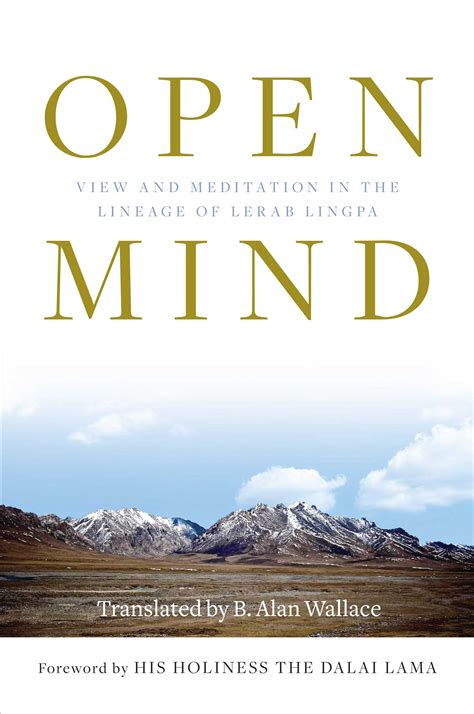
Open Mind: View and Meditation in the Lineage of Lerab Lingpa (hereafter Open Mind), translated by B. Alan Wallace, was published by Wisdom Publications in 2017. It contains writings by three masters: Tertön Sogyal Lerab Lingpa (1856–1926), and two figures described on the cover as his “close disciples”: Tsultrim Zangpo (alias Tulku Tsullo, 1884–c.1957) and Lobzang Do-Ngak Chökyi Gyatso (alias Tulku Sungrab or Kunzang Zhepé Dorje, 1903–1957). The latter figure is of particular interest here. He is someone I have written about several times in the past.2 His attempt to synthesise Geluk and Nyingma philosophy represents an unusual and intriguing form of non-sectarianism, one that has sparked the interest of the current Dalai Lama.
In Open Mind, Wallace does an excellent job of translating Do-Ngak Chökyi Gyatso’s difficult writings. This is hardly surprising, given that he has studied with prominent Geluk and Nyingma teachers in the past and has translated multiple works from both traditions. Yet there is something missing in the English. Some of the wordplay has been lost in translation. Consider, for example, the opening verse of Phyag rdzogs dbu gsum gyi lta ba’i dris lan mkhas pa’i zhal lung, translated by Wallace as Oral Instructions of the Wise: Questions and Answers regarding the Views of Mahāmudrā, Mahāsaṇdhi and Madhyamaka. In Tibetan this verse reads (emphasis added):
རྗེ་བཙུན་འཇམ་དབྱངས་བླ་མ་བཀའ་དྲིན་ཅན། །
དཔལ་ལྡན་རྒྱལ་བ་ཀུན་དང་དབྱེར་མེད་དུ། །
རོལ་བའི་ཀུན་གཟིགས་བློ་གྲོས་མཚན་ཅན་དེ། །
སྙིང་དབུས་པདྨོར་གུས་པས་ལེགས་བཀོད་ནས། །
Wallace translates this as:
I reverently imagine the venerable Mañjughoṣa,
the compassionate guru, indivisible from all the glorious jinas,
on the lotus at the centre of my heart,
bearing the marks of the intelligence that sees all displays [of phenomena].
There are no identifying marks in the original, and there is nothing inaccurate about this as a straightforward rendering. Yet it misses the play on the syllables of the name Jampal Rolwé Lodrö—meaning Mañjuśrī Display’s Intelligence—a clear reference to Amdo Geshe Jampal Rolwé Lodrö (1888–1936). Indeed, you could argue that the primary purpose of this verse is to invoke and identify this guru. What is here translated as “bearing the marks of the intelligence” (blo gros mtshan can) has a further connotation and could even be read as “with the name of Lodrö.”
In another text from the same book, gsar rnying mkhas pa’i dgongs bzhed gcig tu sgrub pa rigs lam bdud rtsi’i mchod sprin, translated by Wallace as An Offering Cloud of Ambrosia on the Path of Reasoning: A Discourse Showing through Sound Logic That the Innermost Intent of Scholars from Both the Old and New Translation Schools is Unified within the Prāsaṅgika System, we find the following (emphasis added):
གང་གི་བློ་གྲོས་ནམ་མཁའི་ཀློང་ཡངས་པོར། །
མཁྱེན་གཉིས་ཉི་ཟླའི་འོད་ཟེར་འབུམ་བརྡལ་བས། །
ཆོས་སྐུའི་དགོངས་པའི་རྩལ་ཆེན་ཡོངས་རྫོགས་པ། །
རྗེ་བཙུན་ཆོས་རྗེའི་ཞབས་པད་སྤྱི་བོས་མཆོད། །
Here the name that is embedded (again without identifying marks) is Khalong Yangpa Tsal, which Amdo Geshe used especially when writing on Nyingma topics.3 When Do-Ngak Chökyi Gyatso mentions this name explicitly in another text gsang chen snga ’gyur gyi bstan pa la bstod pa log rtog mun sel dad pa’i gzi brgya ’bar ba’i nyi ma (A Blazing Sun of Brilliant Faith that Dispels the Darkness of Misconceptions), Wallace misidentifies the target as Patrul Namkha Jigme (1888–1960).4 Then, in his translation of the verse, he sees a reference to Tsongkhapa:
In the vast expanse of the sky of intelligence,
a hundred thousand light rays from the sun and moon of the two kinds of knowledge spread forth,
and the great creative power of the dharmakāya’s enlightened view is complete
in the venerable lord of Dharma [Tsongkhapa (sic)]. I offer reverence with the crown of my head at his lotus feet.
Does this matter? Well, it is clear from this repeated deployment of paronomasia (and from his biography and other writings in general) that Do-Ngak Chökyi Gyatso regarded Amdo Geshe Jampal Rolwé Lodrö as his primary guru. Yet this is not so apparent in Open Mind, which focuses on the connection with Tertön Sogyal Lerab Lingpa and either misses or misrepresents numerous references to Amdo Geshe. This is not to say that Do-Ngak Chökyi Gyatso was not also a disciple of Tertön Sogyal. He certainly was, and one of the texts in Open Mind—an explanation of the Vajrakīlaya mantra—seems especially indebted to Tertön Sogyal’s influence.5 On occasion, Do-Ngak Chökyi Gyatso refers to his three main teachers as emanations of the lords of the three families: Amdo Geshe as Mañjuśrī, Tertön Sogyal as Vajrapāṇi, and his other main teacher, Drakkar Geshe, Lobzang Tendzin Nyendrak (1866–1928) as Avalokiteśvara. When what might appear from a superficial reading to be a generic praise of Mañjuśrī is revealed on closer inspection to be an invocation of Amdo Geshe as Mañjuśrī, we learn something about the author and about the text itself.
How then should we deal with Do-Ngak Chökyi Gyatso’s paronomasia in translation? The current convention is either to italicise the elements of the name in translation or to produce something like the following, which is an adapted version of Wallace’s translation:
I reverently imagine the venerable Mañjughoṣa (Jamyang),
the compassionate guru, indivisible from all the glorious (pal) jinas,
on the lotus at the centre of my heart,
bearing the marks of the intelligence (lodrö) that sees all displays (rolpa) [of phenomena].
This has the virtue of making plain what the author is doing, but the change of word order in English means that the name is now out of sequence. Other than rectifying this discrepancy, is there anything more that we could do here? Perhaps we might attempt a kind of naturalised embedding that would more accurately convey not only the sense but also the form (or style) of the original:
Venerable and gracious Jamyang Lama—Mañjughoṣa Guru—
Inseparable from all the victors archetypal in their splendour,
Emanated in the role of one with peerless, all-seeing intellect—
In devotion, I imagine you upon a lotus dropped into my heart.
This is looser than the earlier version, as it necessarily adds some elements to allow for the wordplay, but it is more representative of the Tibetan. There might be a good reason to prefer the simplicity of added parentheses, but before we dismiss this naturalised interpretation as too liberal or too clunky, we could at least adopt an open mind.
(With thanks to Kelsang Lhamo.)
Bibliography
Pearcey, Adam S. 2021. “Uniting Dge lugs and Rnying ma Views: The Ris med Philosophy of Blo bzang mdo sngags Chos kyi rgya mtsho (1903–1957)” in Nonsectarianism (ris med) in Nineteenth- and Twentieth-Century Eastern Tibet: Religious Diffusion and Cross-fertilization beyond the Reach of the Central Tibetan Government, ed. Klaus-Dieter Mathes and Gabriele Coura. Leiden: Brill. https://doi.org/10.1163/9789004466364_006
van der Kuijp, Leonard W.J. 2022. “Studies in the Life and Thought of Mkhas Grub Rje II: Notes on Poetry, Poetics and Other Things in Mkhas Grub rje’s Oeuvre.” Journal of Tibetan Literature 1 (1): 93 n.58. https://doi.org/10.58371/jtl.2022.45.
Wallace, B. Alan. 2017. Open Mind: View and Meditation in the Lineage of Lerab Lingpa. Somerville: Wisdom Publications.
Notes
- See van der Kuijp 2022. ↩︎
- See, for example, Pearcey 2021. ↩︎
- See also Amdo Geshe Jampal Rolwé Lodrö, The Jewelled Garland: An Aspiration for the Spread of the Teachings of the Omniscient Father and Son, Masters of the Teachings of the Ancient Translations ↩︎
- Wallace 2017, p. 240 n. 6. Wallace also reverses the order in which two of Do-Ngak Chökyi Gyatso’s teachers are mentioned, placing Tertön Sogyal first, even though the text begins with the reference to Khalong Yangpa Tsal, i.e., Amdo Geshe. ↩︎
- rdo rje phur pa’i rtsa sngags kyi don cung zad bshad pa snga ’gyur rig ’dzin rgan po’i thugs bcud, although even here the homage begins with a reference to “Jamgön, lord of Dharma” (’jam mgon chos kyi rje), which I take to mean Amdo Geshe, before paying homage to Lerab Lingpa. ↩︎

