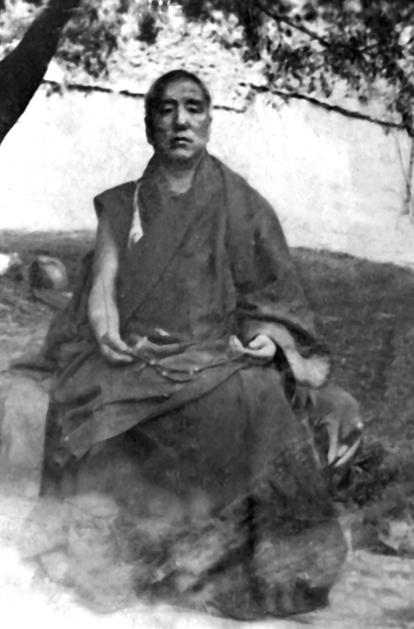
Jamyang Khyentse Chökyi Lodrö writes in his own autobiography that he was born in the female Water Snake year. He is unsure of the precise date, but says that it was during the autumn. This means it was certainly 1893. The Water Snake began in February 1893 and continued until the following February, but the reference to autumn precludes 1894.
I was born […] in the female Water Snake year—
from The Play of Illusion: An Autobiography
during the autumn months, I heard it said.
My parents had little concern for such things,
so they left no written record
of the planets and stars, or dreams and signs.
This date is reiterated in another autobiography and in the biography written by Dilgo Khyentse Rinpoche (translated into English in 2017), as well as in the same master’s catalogue to Jamyang Khyentse’s writings.
So far so clear. Yet, many sources, including recent ones, state that Khyentse Chökyi Lodrö was born in 1896. One such is E. Gene Smith’s Among Tibetan Texts (Boston: Wisdom Publications, 2001), and Smith’s unimpeachable authority may account for some of the other instances. Another is Chögyal Namkhai Norbu’s The Lamp That Enlightens Narrow Minds (Berkeley, CA: North Atlantic Books, 2012), although the book does note (p. 141, n. 28) that Tulku Thondup’s Masters of Meditation and Miracles (Boston: Shambhala, 1996) and other texts give the birth year as 1893.
Continue reading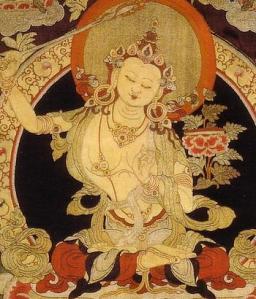 Amongst the many things Tibetans inherited from India was a sense that names, when applied to exalted beings, are far more than mere verbal labels aiding identification. Deities’ names capture something of their essence, and reciting them is a form of invocation and praise. Most mantras have names at their heart, and there are whole texts, such as Mañjuśrī–nāma-saṃgīti (Reciting the Names of Mañjuśrī), devoted to lists of alternative names or epithets.
 Here’s one for fellow Tibeto-bibliophiles. Gene Smith of TBRC was recently asked for his pick of the ‘must have’ Tibetan dictionaries. These, I am told, were his ‘top three’:
 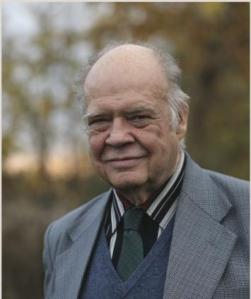 The following points, derived from Gene Smith’s Among Tibetan Texts by Kurtis Schaeffer, were shared at Columbia University’s panel discussion on the future of Tibetan studies after Gene Smith.
 During a recent visit to the offices of TBRC, I was fortunate enough to glimpse Gene Smith‘s famous ‘notebooks’, the painstakingly typewritten transcripts of texts and interviews, with their own particular system of colour coding, capitalisation, underlining and marginalia. Many pages feature handwritten corrections and further notes added at a later date. Most of the books are leather-bound in green with titles on the spine. There appeared to be at least fifty in the office, but there might be others elsewhere. Jeff Wallman estimated that they represent about twenty years of work.
 Adam S. Pearcey
You must be logged in to post a comment.