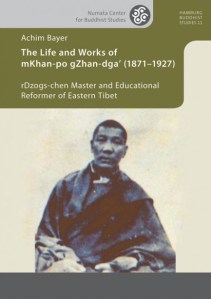
 Who gets to be omniscient in Tibetan Buddhism? More to the point, who gets to be called omniscient or all-knowing (kun mkhyen), an epithet more readily associated with the Buddha himself?[1] This question surfaced while reading Achim Bayer’s carefully researched, recently published monograph on Khenpo Shenpen Nangwa, alias Khenpo Shenga—The Life and Works of mKhan-po gZhan-dga’ (1871–1927).
Bayer introduces a citation (p.108) that appears in Shenga’s treatise The Mirror that Clearly Reveals the Knowable (Shes bya gsal ba’i me long) where it is credited to the ‘later omniscient one’ (kun mkhyen phyi ma). Bayer was unable to identify the passage and speculates as to the identity of this later omniscient one. Could it be Longchen Rabjam (1308–1364), he wonders, or possibly Gorampa Sonam Sengge (1429–1489). The fact that there are multiple contenders owes something to Khenpo Shenga’s own intellectual development (as described in wonderful detail in Bayer’s book), which began with a thorough Nyingma education and evolved over time so that in his Divine Music he expressed a newfound appreciation for, and confidence in, Sakya views.
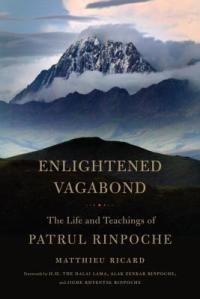 I imagine that most readers of this blog will be as keen as I am to read Matthieu Ricard’s forthcoming book,
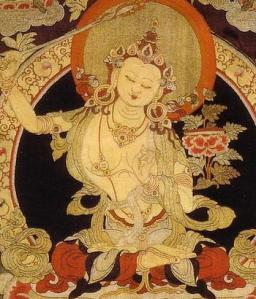 Amongst the many things Tibetans inherited from India was a sense that names, when applied to exalted beings, are far more than mere verbal labels aiding identification. Deities’ names capture something of their essence, and reciting them is a form of invocation and praise. Most mantras have names at their heart, and there are whole texts, such as Mañjuśrī–nāma-saṃgīti (Reciting the Names of Mañjuśrī), devoted to lists of alternative names or epithets.
 In the beginning was the word. And the word was spoken… The teachings of the Buddha, as is well known, were not at first written down, but were preserved and passed on
 Adam S. Pearcey
You must be logged in to post a comment.