Author Archives: Adam

Uniting Outer and Inner Solitude: Patrul Rinpoche’s Advice for Alak Dongak Gyatso

Introduction

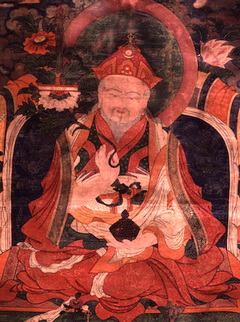
Patrul_Rinpoche_new

Dza Patrul Rinpoche, Orgyen Chökyi Wangpo

In his account of the famous debate between Ju Mipham Namgyal Gyatso (’ju mi pham rnam rgyal rgya mtsho, 1846-1912) and Alak Dongak Gyatso (a lags mdo sngags rgya mtsho, 1824–1902),[1] Khetsun Sangpo Rinpoche tells us that Alak Dongak was so upset at losing the contest and seeing his treatise on Dzogchen burned in front of his teacher, Patrul Rinpoche (rdza dpal sprul o rgyan chos kyi dbang po, 1808-1887), that he broke down and wept.[2]

When I recently asked Tulku Thondup Rinpoche about this, he mentioned another possible explanation for Alak Dongak’s distress:

Khenpo Chemchok, my own teacher, used to say that on one occasion Könme Khenpo, my predecessor, asked Alak Dongak if it was true that he had cried after the debate with Mipham. Yes, he replied, he had wept, but it was not because he had lost the argument. In fact, he said, he had cried because Patrul Rinpoche had chastised him. Whenever he was winning, he said, Patrul would say to him, “I told you to meditate on love and compassion, but instead you’ve filled your head with all this scholarly stuff!” Yet whenever Mipham was winning, Patrul Rinpoche said nothing. Alak Dongak told Patrul, “I didn’t neglect your instructions. I have meditated on bodhicitta.” But it was the accusation of failing to apply his teacher’s instructions, he said, and not the humiliation of losing, that made him weep.

Continue reading

Remembering a Genius: Professor Alexander Piatigorsky

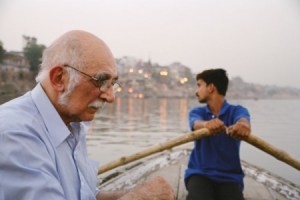
Alexander Piatigorsky in a scene from Philosopher Escaped

Alexander Piatigorsky in a scene from Philosopher Escaped

I learned recently that Viktoria Lysenko, professor of Oriental philosophy at the Russian Academy of Sciences in Moscow, is compiling a book on the late great Alexander Piatigorsky (1929-2009), émigré philosopher and scholar of Buddhist and Indian thought. The book will be in Russian and will include some of his papers on topics including Early Buddhism and the Abhidharma, in addition to recollections from his former students. As someone who had the great good fortune to study with Piatigorsky in the late 1990s, if only as an undergraduate, I answered some questions for the project and thought I would also share some memories here.

Continue reading

Words of Wonder: Jamyang Khyentse Chökyi Lodrö on Kolkata

Chowringhee_Square_Mosque1945Introduction

Much has been written in recent years about the life of Gendün Chöpel (dGe ‘dun chos ‘phel, 1903–1951) and his travels through India and Sri Lanka in the 1930s and 40s. The very latest offering, Grains of Gold: Tales of a Cosmopolitan Traveler (trans. Thupten Jinpa and Donald S. Lopez Jr, Chicago and London: University of Chicago Press, 2014), is in many ways the most fascinating, and is highly recommended to readers of this blog. Part of what makes Gendün Chöpel’s story so intriguing is that the attitude of openness and curiosity that he exhibited in his travelogues, translations and essays was in such marked contrast to the official policy of insularism then prevailing in his homeland. And it was all the more tragic, therefore, when he was condemned and imprisoned by the Tibetan authorities before his premature death. For it meant that the country lost a liberal, modernising voice, precisely at a time when, it might be argued, it needed one most of all.

Continue reading

More Shakespeare in Tibetan

d21cb-shakespeareAs you may be aware, today is the 450th anniversary of William Shakespeare’s birth. In order to mark the occasion, let us share some more of the Bard’s most famous lines translated into Tibetan. This time, the translation comes directly from the forthcoming Tibetan version of Sogyal Rinpoche’s Tibetan Book of Living and Dying. Continue reading

Lines from Shakespeare: In Memory of Nelson Mandela

On the day the world remembers Nelson Mandela, it seems appropriate to publish this translation into Tibetan of some lines from Shakespeare’s Julius Caesar (act II, scene II) – the very lines that Mandela highlighted in the so-called ‘Robben Island Shakespeare’ on the 16th December 1979 during his long period of captivity.

Continue reading

Dmu zhag(s)

03f53-brda-dkrol-gser-gyi-me-long-zhes-bya-ba-bzhugs-soOne of the translations published recently over on Lotsawa House twice includes the expression “heavenly lustre.” This curious phrase is a translation of the Tibetan dmu zhag[s], a term that occurs a number of times in Mipham’s writings, but is absent from most dictionaries. I say “most” because although it is not found in popular lexicons, it does appear in Erik Haarh’s The Zhang-zhung Language (p. 37), where he says it is the equivalent of mkha’ lding, and offers the translation, “the sky-soaring one, Garuda.”

Continue reading

Greater than A Wish-Fulfilling Jewel

A Note on the Translation of the First of Langri Tangpa’s Eight Verses

The Eight Verses of Training the Mind (blo sbyong tshigs rkang brgyad ma) by Geshe Langri Tangpa (1054-1123) is a seminal work of Tibetan literature, and surely deserves to be ranked among the world’s spiritual classics. There have been many translations, especially in recent years, largely on account of its popularity with His Holiness the Dalai Lama, who has taught it on numerous occasions all over the world. Historically however, it appears to have received less scholarly attention and inspired fewer commentaries than related works such as the Seven Points of Mind Training (blo sbyong don bdun ma) attributed to Geshe Chekawa (1101-75)—who, incidentally, also composed a commentary on the Eight Verses. Perhaps this shortage of commentarial literature explains the apparent difficulty of interpreting the very first of Langri Tangpa’s eight verses.

Continue reading

The Long-life Prayers of Minling Terchen Gyurme Dorje

José Cabezón’s brief study of long-life prayers (or zhab brtan) in Tibet (“Firm Feet and Long Lives: The Zhabs brtan Literature of Tibetan Buddhism”), which appeared in Tibetan Literature: Studies in Genre in 1996, makes the claim that “the zhabs brtan [genre] seems to have developed almost exclusively within the dGe lugs school until very recent times.” In a note, he goes on to say that he “searched, in vain, for examples of zhabs brtan in the works of Tāranātha (b.1575), Brug pa pad ma dkar po, 1526-1592), Jaya Paṇḍita (b.1642) and ‘Ju Mi pham rgya mtsho (1846-1914).” Well, with the benefit of the TBRC database, we can now say that plenty of zhabs brtan prayers do appear in the writings of Minling Terchen Gyurme Dorje (smin gling gter chen ‘gyur med rdo rje,1646-1714), an important figure in the Nyingma school.

Although it might be true that the Gelugpa were the first to compose such texts, it is clear from Minling Terchen’s collected writings that followers of the Nyingma tradition were requesting and composing zhabs brtan as early as the late seventeenth century. Volume Ca of the writings includes a text called bshes gnyen dam pa ‘ga’ zhig la bstod pa brtan zhugs su spel ba dag snang dad pa’i me tog, which is a compilation of brtan zhugs/zhabs brtan works, as well as the closely related genre of prayers for swift rebirth (myur ‘byon gsol ‘debs). The phrase zhabs brtan gsol ‘debs is used in several of the colophons, as is the more unusual form zhabs brtan rten ‘byung.

Continue reading

Setting the Wheels in Motion

Tengyur ConferenceOnly a short distance from the glorious Dhamek stupa, marking the scene of Buddha’s first ever teaching, Sarnath’s Central University of Tibetan Studies provided an auspicious backdrop for the latest major conference on Tibetan Buddhist translation. The four-day event, organized jointly by the Central University and Columbia University’s American Institute of Buddhist Studies, focused on the Tengyur, the collection of ‘translated treatises’ (or shastras in Sanskrit) composed by the learned and accomplished masters of India and compiled in Tibet as the counterpart to the Kangyur, the ‘translated Word of the Buddha’. With the participation of His Holiness the Dalai Lama, Professor Samdhong Rinpoche, the Ganden Tripa and many other Tibetan lamas, as well as leading scholars and translators from around the world, this gathering marked another important milestone on the road towards the eventual goal of translating the entire Tibetan Buddhist canon into English and other languages.

Continue reading

Outrageously Large Numbers

I have recently been reading the new translation of Mipham Rinpoche’s byang chub sems dpa’ chen po nye ba’i sras brgyad kyi rtogs brjod nor bu’i phreng ba by Lama Yeshe Gyamtso (A Garland of Jewels, Woodstock: KTD Publications, 2008). As the (Tibetan) name suggests, the text offers accounts of the lives and careers of the eight great bodhisattvas, also known as the ‘eight close sons’, compiled from canonical sources, mainly the sūtras. Not surprisingly perhaps, Mipham devotes considerably more space to Mañjuśrī than he does to the other bodhisattvas.

Continue reading